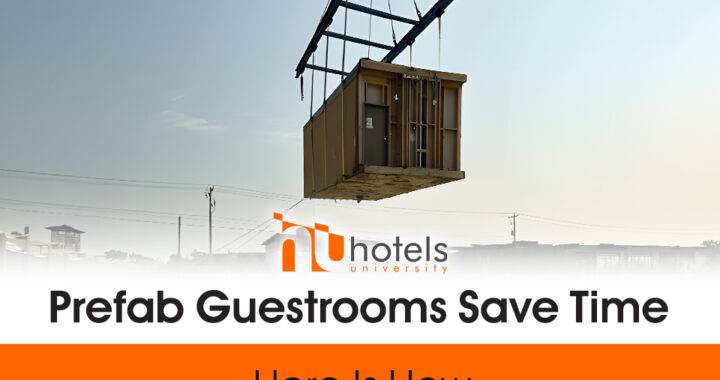
Hotel margins are tight, and labor costs keep climbing. Every extra month on the schedule is a month without revenue. Modular guestroom construction can shorten schedules and improve speed to market, but only if the design is coordinated correctly from the start. Here is what developers need to know.
Why Guestrooms Are the Right Place to Start
Guestrooms are the most repeated part of a hotel. That repetition makes them a strong fit for factory production.
Room sizes are often standardized. Brand requirements are usually clear. Details repeat from floor to floor. That gives prefab teams a better chance to build faster with fewer surprises.
This does not mean the entire hotel needs to be modular. Lobbies, back-of-house spaces, and common areas are often built conventionally. For many projects, the best answer is a hybrid approach.
The Schedule Advantage Is Real
Modular Building Institute reports that modular construction can reduce project schedules by as much as 50 percent.
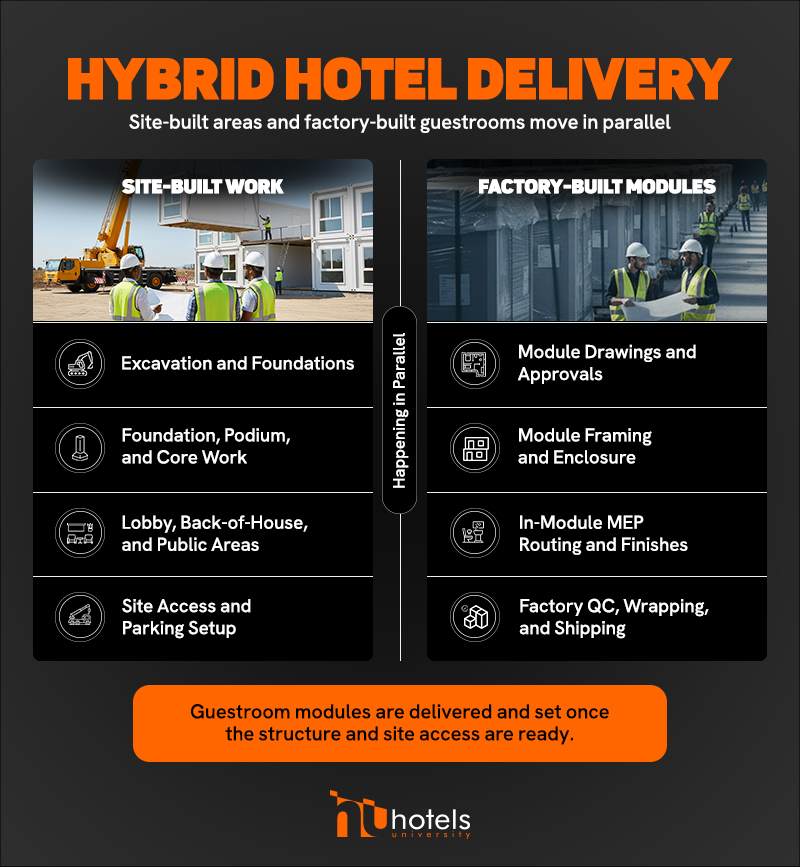
While site work and foundations move forward, guestroom modules can be built in a factory. That reduces the stop-and-start delays that often happen when trades wait on each other in the field.
For developers, every month saved can mean an earlier opening, earlier revenue, and lower carrying costs.
Where the Speed Advantage Pays Off
Prefab guestrooms can help the project move faster when the plan is coordinated early. While site work and foundations move forward, guestroom modules can be built in a factory. That overlap can shorten the path to opening and help developers reach revenue sooner. The value depends on the full delivery plan. Design, factory partner, transport, site access, approvals, and local labor all affect whether prefab supports a faster project.
What Has to Be True for Prefab to Perform
Prefab guestrooms need early decisions.
Module dimensions must work with room width, transport limits, site layout, and corridor connections. MEP routing must be planned before production begins. Brand submittals need to be resolved in design, not after the factory starts building.
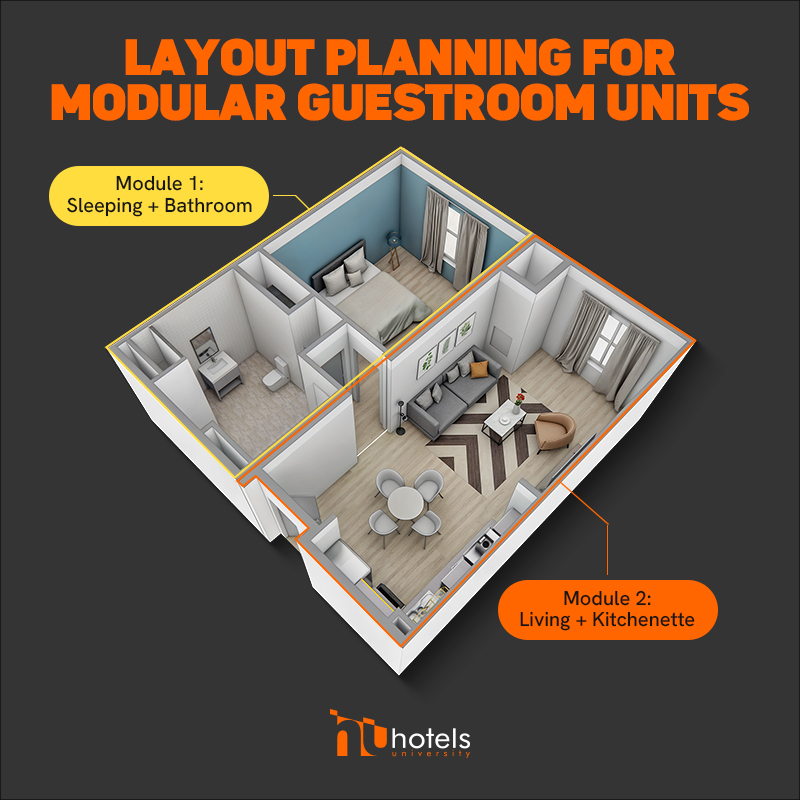
Prefab works best when the design team knows what should be built in the factory and what should stay on site. That choice affects cost, schedule, transport, site access, and coordination between trades.
When that plan is clear early, prefab is more likely to save time instead of creating new delays.
How BASE4 Makes Prefab Guestrooms Work
BASE4 helps developers test prefab before the project is too far along to change direction.
We help answer the questions that decide whether prefab will work:
- Which parts of the hotel should be factory-built?
- Which parts should stay site-built?
- Do module sizes work with the brand, site, and transport limits?
- Can MEP routes be coordinated before production starts?
- Will the prefab plan support schedule, approvals, and speed to opening?
Because architecture, structural, MEP, interiors, and visualization are in-house, BASE4 can study these issues early in one coordinated design process.
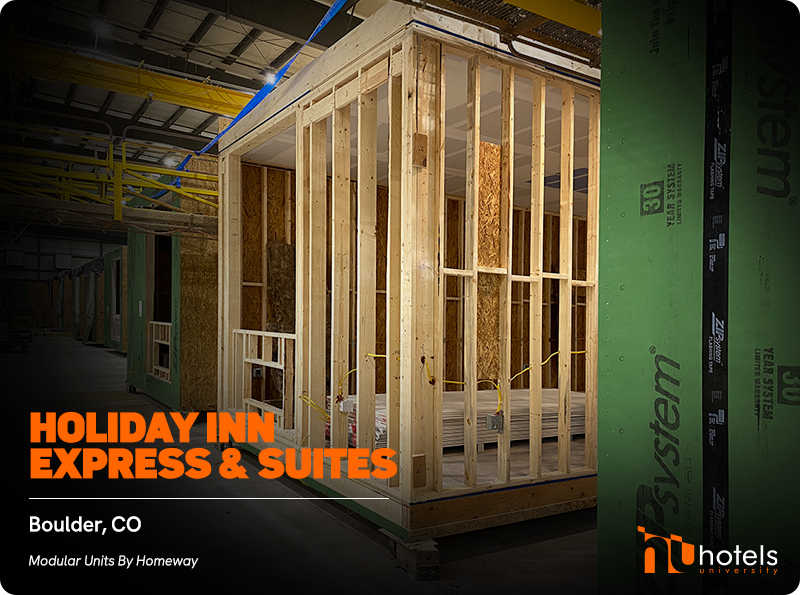
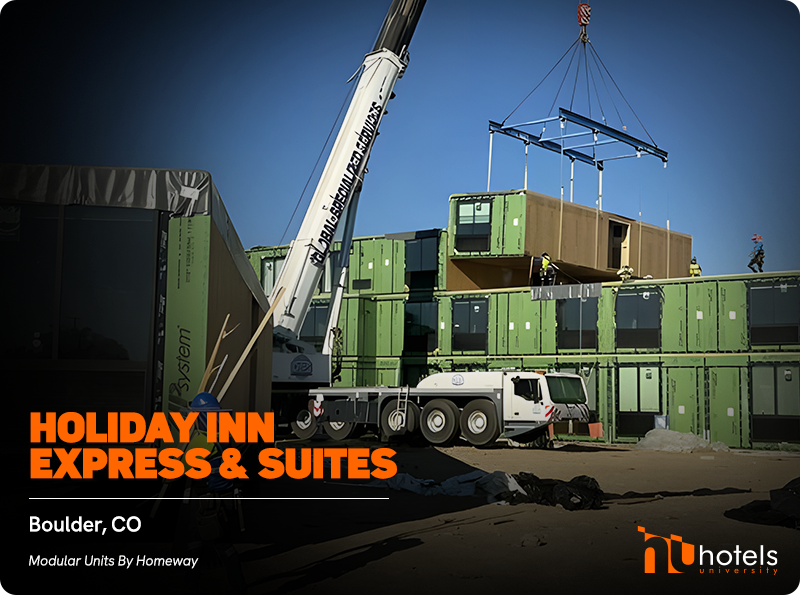
This coordinated approach supports BASE4’s prefab hotel work across multiple projects, including the Holiday Inn Express & Suites in Boulder, Colorado, pictured below during construction.
Thank you,
Blair Hildahl
Blair@hotelsuniversity.com
608.304.5228