
Low-cost land can be the most expensive mistake in a hotel deal.
A site can look right at first glance. The price looks good. The location seems workable. The deal feels like it is moving in the right direction. Then the real costs show up.
Cheap land does not always mean a cheaper project.
Before moving too far into the deal, developers should ask one question:
Will this site still work after design, permitting, and construction costs are added?
Site Conditions Shape the Budget
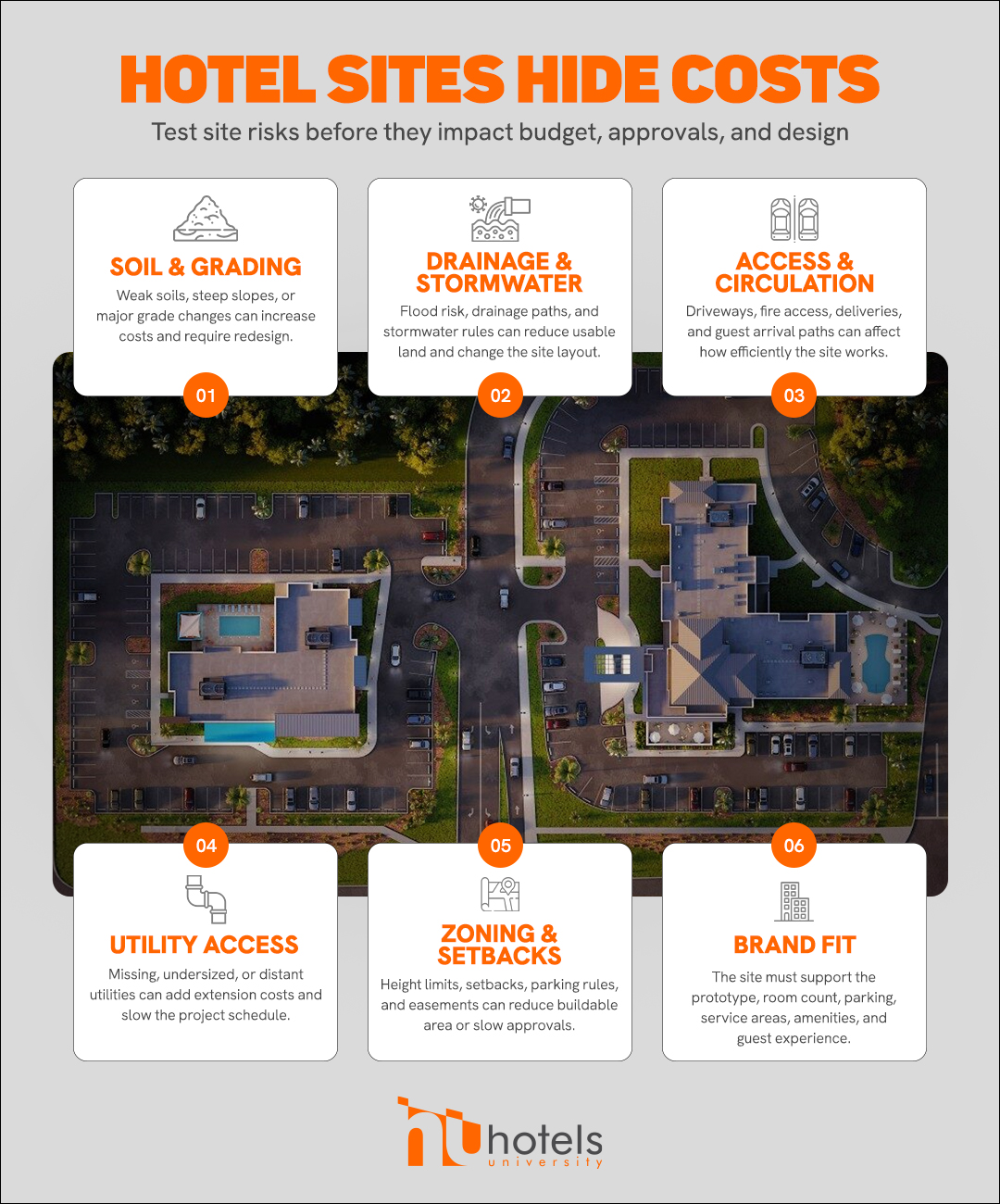
Poor drainage. Weak utility access. Difficult grading. Zoning limits. Access issues. Any one of these can force redesigns, delay approvals, reduce efficiency, and add cost before the project ever reaches construction.
These issues should not wait until permit. Found late, they can change the building footprint, parking layout, structural system, civil scope, MEP routing, and overall budget.
Finding them early is key to avoiding costly surprises after the deal has already moved too far.
Entitlements Can Slow Everything
A strong land deal can still become risky if approvals take too long. Zoning, setbacks, parking rules, height limits, easements, access requirements, landscape buffers, and review timelines can all affect whether the site can support the hotel as planned.
When these items are missed early, we often see the same problems follow: delays, redesigns, added consultant work, and changes to the site plan. That can affect financing, brand deadlines, construction start dates, and the overall pro forma.
Time lost in approvals is money lost in the deal.
Brand Fit Starts at the Site
Hotel brands have real site requirements. Prototype layout, parking, guest arrival, back-of-house space, service access, amenity placement, exterior visibility, and operational flow all matter.
If the site conflicts with the brand, the developer may face redesigns, waivers, additional costs, or a less efficient plan. A cheap site can become expensive if it cannot support the flag correctly.
BASE4 Helps Developers Test Sites Early
Before land becomes a cost problem, BASE4 helps developers pressure-test the site, the brand fit, the parking, the utilities, the access, and the approval path early.
We have seen how small site issues can become budget, schedule, and design problems later. Our role is to help developers find those risks before they become deal problems.
Why developers work with BASE4:
- Early planning before major money is committed
- In-house architecture, structural, MEP, interiors, and visualization
- Hotel brand experience across major flags
- 100% Revit and 3D coordination
- Cost-aware design decisions from the start
- Site planning that connects layout, parking, utilities, and building efficiency
- Prefab and offsite expertise when speed or repeatability matters
An early site review helps protect the budget, schedule, and pro forma before hidden costs become deal problems.
Thank you,
Blair Hildahl
Blair@hotelsuniversity.com
608.304.5228