
How many apartments can the same site support, and when does adding more stop improving the deal?
Density simply means how many apartments a site can support per acre. Increasing density can create more revenue from the same land. But the right question is not how many units you can fit. It is how many units create the most value after accounting for construction, parking, and other project costs.
Building Type Sets the Range
Building type has a major impact on achievable density.
Garden apartments typically use more land and surface parking. Wraps and podiums increase yield by integrating structured parking. Mid-rise and high-rise buildings can push density further, but they also introduce greater structural and building-system requirements.
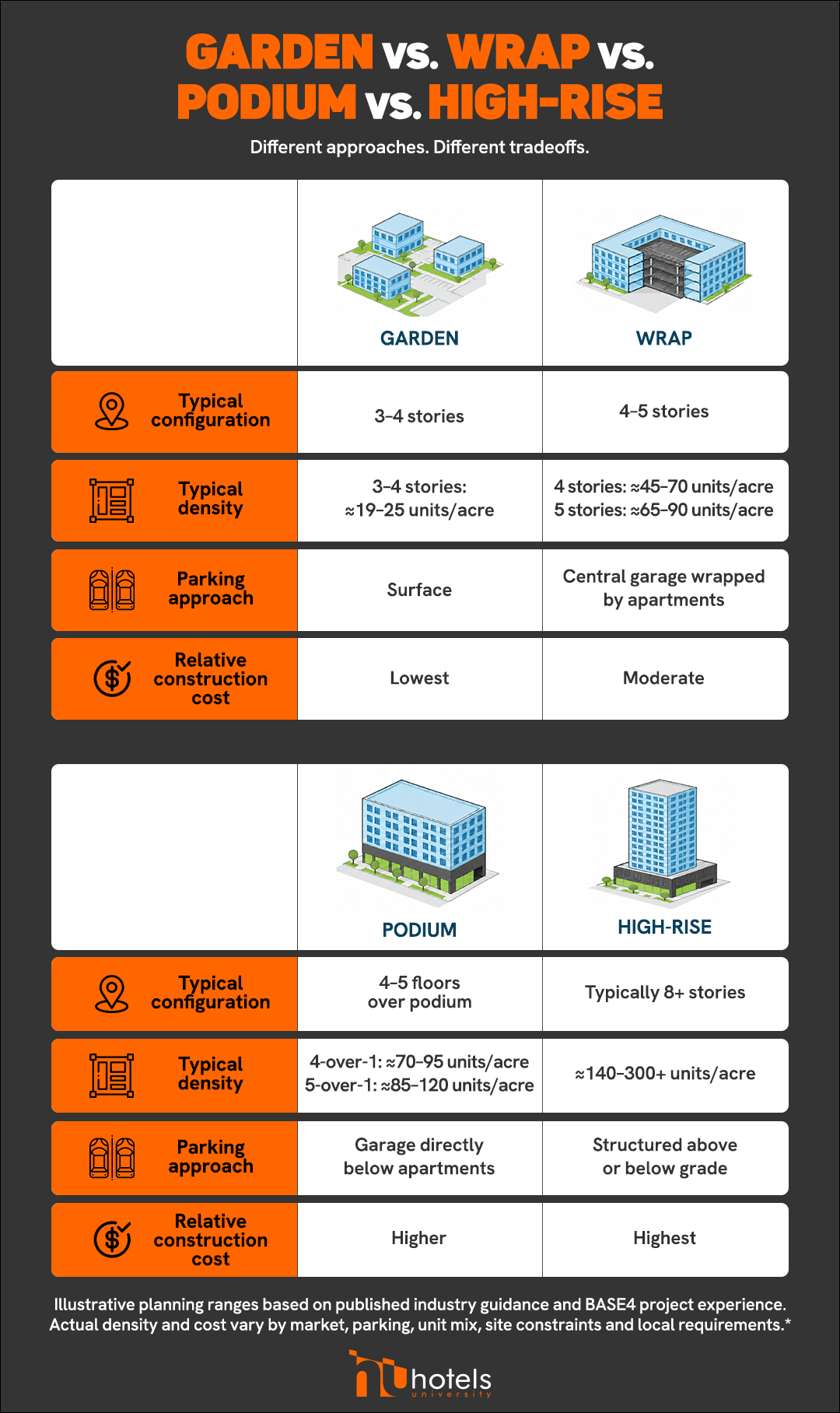
More density can create more units. It can also create a more expensive building.
Early Decisions Can Change Your Yield
Once the building type is established, several design decisions can change the final unit count.
-
Unit mix: Smaller, more efficient units can sometimes increase the number of apartments without increasing the building footprint.
-
Circulation: Efficient corridors, stairs, elevators, and shared spaces can reduce the area that does not generate rent.
-
Site layout: Building placement, setbacks, access, and open space requirements can all affect how much of the site can be used for housing.
More Units Only Matter If They Add Value
Higher density may create more apartments, but it can also require structured parking, podium or concrete construction, additional elevators, and more complex building systems.
The key comparison is:
Value created by additional units
vs.
Incremental cost required to create them
If the added value outweighs the added cost, higher density may strengthen the project. If costs rise faster than value, pushing density further may hurt the deal.
Turn Site Potential Into a Coordinated Design
BASE4 helps developers test density before major project decisions are locked in.
Why developers work with BASE4:
-
Site planning tests how building type, parking, unit mix, and layout affect achievable unit yield.
-
Integrated design evaluates the structural and building-system implications that come with higher density.
-
Cost analysis weighs the value of additional units against the incremental cost required to create them.
-
Early decision-making helps developers select the strongest development approach before major design decisions are locked in.
Send us your site and target program. We’ll help compare where additional units strengthen the deal and where they start to work against it.
Thank you,
Blair Hildahl
Blair@hotelsuniversity.com
608.304.5228