
The HVAC system is not just a mechanical decision.
For hotel developers, it affects guest comfort, noise, energy use, room layout, maintenance, exterior design, first cost, and long-term operating cost.
That is why the system should be evaluated early, before layouts, budgets, and MEP coordination are locked in.
PTAC, VTAC, and VRF systems can all work, but the right choice depends on your project’s layout, guest comfort goals, budget, energy strategy, and maintenance plan.
What Influences the HVAC Decision?
Before choosing a system, developers should review the full project picture:
- hotel type
- brand expectations
- guestroom size
- climate
- energy demand
- comfort goals
- exterior design
- maintenance access
- smart controls
- refrigerant requirements
- code needs
- replacement strategy
The goal is not to choose the most advanced system, but to select the one that best fits the project’s specific needs.
PTAC Systems
-
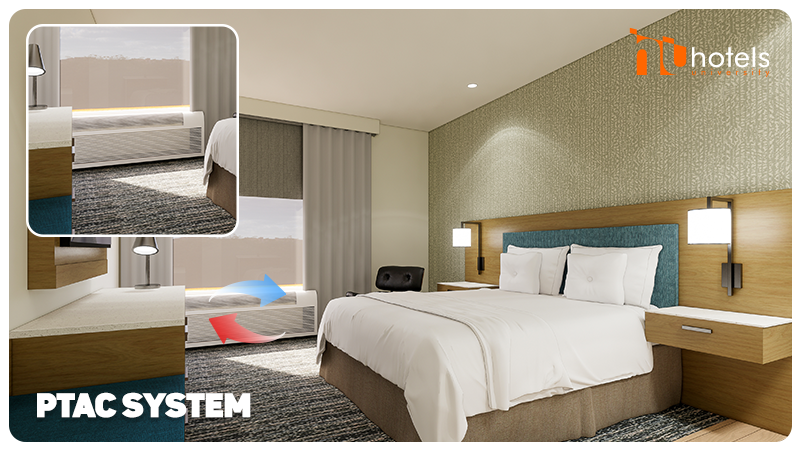
PTAC is a self-contained unit installed through the exterior wall, usually below the window. One unit serves one guestroom.
-
PTAC systems are common because they are simple, familiar, and easy to replace room by room.
-
Developers should consider guestroom visibility, exterior grilles, noise, energy performance, and service access.
VTAC Systems
-
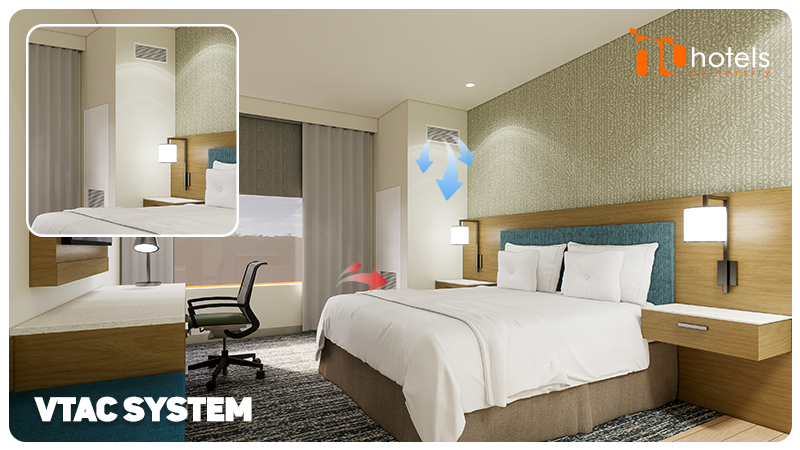
VTAC is installed vertically in a closet or concealed space and uses grilles or short duct runs to serve the room.
-
VTAC can offer individual room control with a cleaner guestroom look than PTAC.
-
Key considerations include closet space, duct routing, condensate, access panels, service clearance, and room efficiency.
VRF Systems
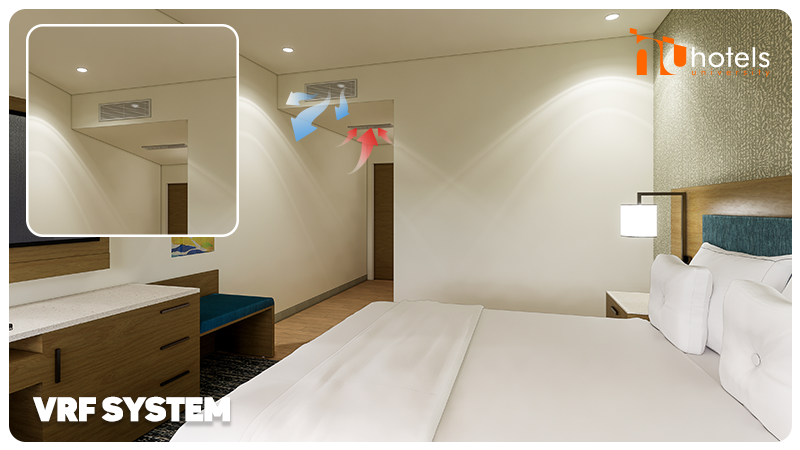
- VRF connects outdoor equipment to multiple indoor units using refrigerant piping.
- VRF systems can support zoning, quieter operation, and stronger energy performance.
- Developers should plan carefully for upfront cost, engineering complexity, refrigerant routing, shafts, controls, and maintenance training.
Developer Takeaway
-
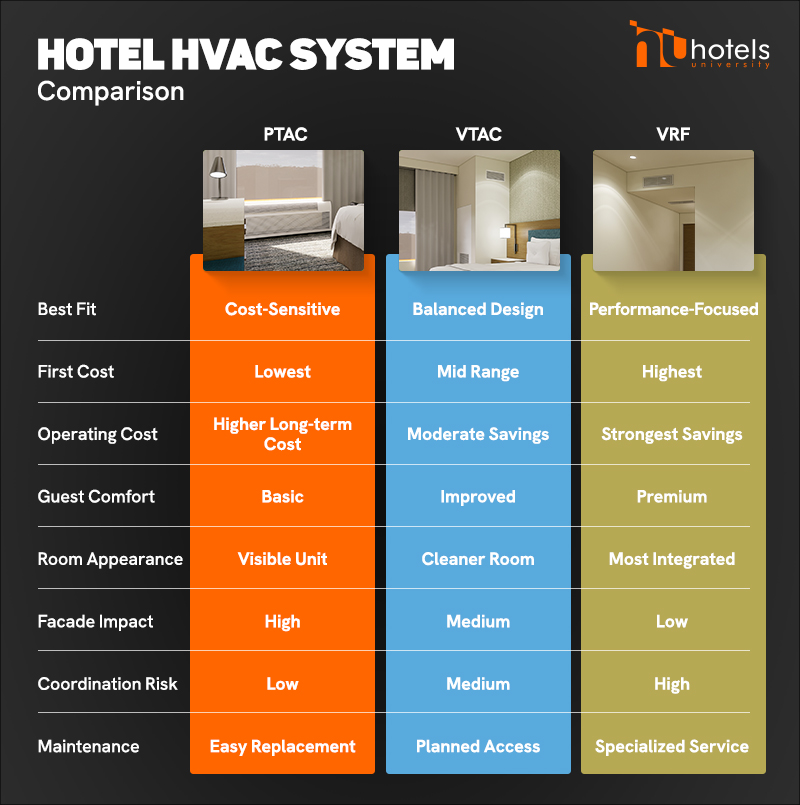
Choose PTAC when first cost, simplicity, and easy replacement matter most.
-
Choose VTAC when the project needs a cleaner guestroom look while keeping individual room control.
-
Choose VRF when comfort, quiet operation, zoning, and long-term energy performance are bigger priorities.
How BASE4 Helps
BASE4 helps developers evaluate HVAC options early, before system decisions create layout, cost, or coordination problems.
Why developers work with BASE4:
- Architecture and MEP under one roof
- 100% Revit-based coordination
- Hotel design experience across major brands
- Early planning for shafts, routing, access, and exterior impacts
- Cost-aware design that considers first cost, operating cost, maintenance, and replacement strategy
The result: fewer late changes, better project fit, and smarter hotel performance.
Thank you,
Blair Hildahl
Blair@hotelsuniversity.com
608.304.5228